
There’s a growing movement in the wellness world that’s bringing breath back into focus. From fitness and mental health to science and mindfulness, everyone seems to be talking about breathing again — how it shapes our mood, energy, and ability to cope with stress.
Yet, the more we learn through research, the more it confirms what yogis have known for centuries:
Long before science could measure or explain it, breath was already guiding people back into balance — one inhale and exhale at a time.
My Relationship with the Breath
My understanding of the breath has been shaped by many corners of life — through fitness, high-pressure work, and years of yoga study.
As a fitness professional since 1998, I first learned about how heart rate and the nervous system respond to effort and recovery. Later, while working in the prison service, I trained in control and restraint — and that’s where I really began to understand how the body reacts in moments of high stress. We studied the sympathetic nervous system — the “fight or flight” response — and how it can completely take over when we feel threatened or overwhelmed.
At the same time, I was exploring yoga more deeply. During my yoga teacher training, pranayama — the practice of breath control — was introduced as a natural part of learning. A few years later, I had the chance to study with B.K.S. Iyengar, I remember the breath was often counted in six or multiples of six. That experience deepened my curiosity about the link between traditional breathing patterns and what I’d already seen in physiology and stress training.
Over time, these pieces came together — fitness, science, yoga, and lived experience — to form a simple understanding: breath is the thread that connects it all.
Breath and the Nervous System
The autonomic nervous system runs quietly in the background. It keeps your heart beating, digestion working, and hormones in balance — all without you having to think about it. It has two main branches:
- Sympathetic: activates energy and alertness (“fight or flight”)
- Parasympathetic: supports rest, repair, and recovery (“rest and digest”)
Most of this system runs automatically, outside of our control. But there’s one powerful exception: the breath.
Every time we consciously slow the breath, we send a message to the body that it’s safe to relax. That’s why breath awareness can calm the mind, ease tension, and create a sense of stability — even in challenging moments.
Modern research now confirms what ancient yoga practices already understood. Slow, rhythmic breathing helps the body shift from the sympathetic to the parasympathetic state. It can improve heart rate variability (a marker of balance in the nervous system), support emotional regulation, and increase resilience to stress.
The 5.5-Second Breath
One rhythm that’s been widely studied is called coherent breathing — roughly six breaths per minute, or:
Inhale: 5.5 seconds
Exhale: 5.5 seconds
This pattern helps bring the heart, lungs, and nervous system into a synchronised rhythm. It steadies heart rate, supports emotional balance, and promotes a calm yet alert state.
Interestingly, this is almost identical to many traditional pranayama counts. Yogis discovered through direct experience what modern instruments now record: when the breath is smooth and steady, the whole system moves towards harmony.
A Spectrum of Breath Practices
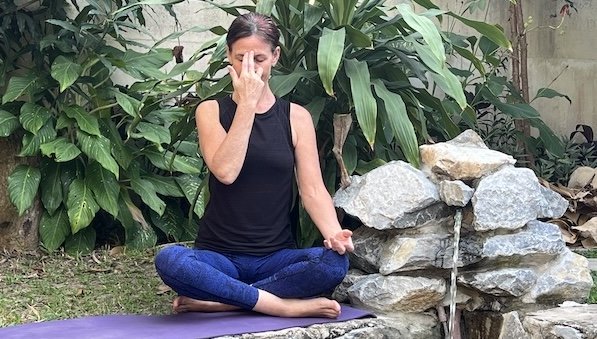
Pranayama includes many techniques, each with a different effect on the nervous system. A few examples:
- Nadi Shodhana (Alternate Nostril) – balancing and calming
- Ujjayi – focusing and grounding
- Bhramari (Humming Bee) – soothing and regulating through vibration
- Kapalabhati / Bhastrika – energising and awakening when used intentionally
- Viloma / Anuloma – refining awareness of each phase of the breath
Whether or not we measure them scientifically, these practices share a common thread: they build awareness and restore a sense of agency over our inner state.
Old Wisdom, New Understanding
“Breathwork” might sound like a modern wellness trend, but most of what’s popular today already exists in the pranayama tradition. Science is simply finding new language to describe what yogis have practised for centuries.
We’re not reinventing the wheel — we’re remembering how to turn it.
Begin Simply
You don’t need an app, retreat, or complex technique to start. Just begin with this simple rhythm:
- Inhale for 5.5 seconds
- Exhale for 5.5 seconds
- Breathe through the nose
- Practise for 5–10 minutes a day
Even a few minutes of slow, mindful breathing can shift the body towards calm and clarity. Over time, it strengthens your ability to respond rather than react — and helps you feel more at home in your own body.
A Final Reflection
The breath is with us every moment of our lives — a quiet, constant companion. When we start to pay attention, it becomes more than a background function; it becomes a teacher.
Whether in movement, stillness, stress, or rest, the breath offers us a way back to balance — patiently waiting for us to notice.
This article draws on both ancient teachings and modern evidence. It’s intended for general education, not medical advice. If you’re working with trauma, anxiety, or health conditions, consider learning with a qualified teacher or therapist alongside your own practise.